Google DeepMind Partners with Commonwealth Fusion Systems to Accelerate Clean Energy Breakthrough
In a landmark collaboration that could dramatically accelerate the timeline for viable fusion energy, Google DeepMind today announced a research partnership with Commonwealth Fusion Systems (CFS), combining cutting-edge artificial intelligence with revolutionary fusion technology.
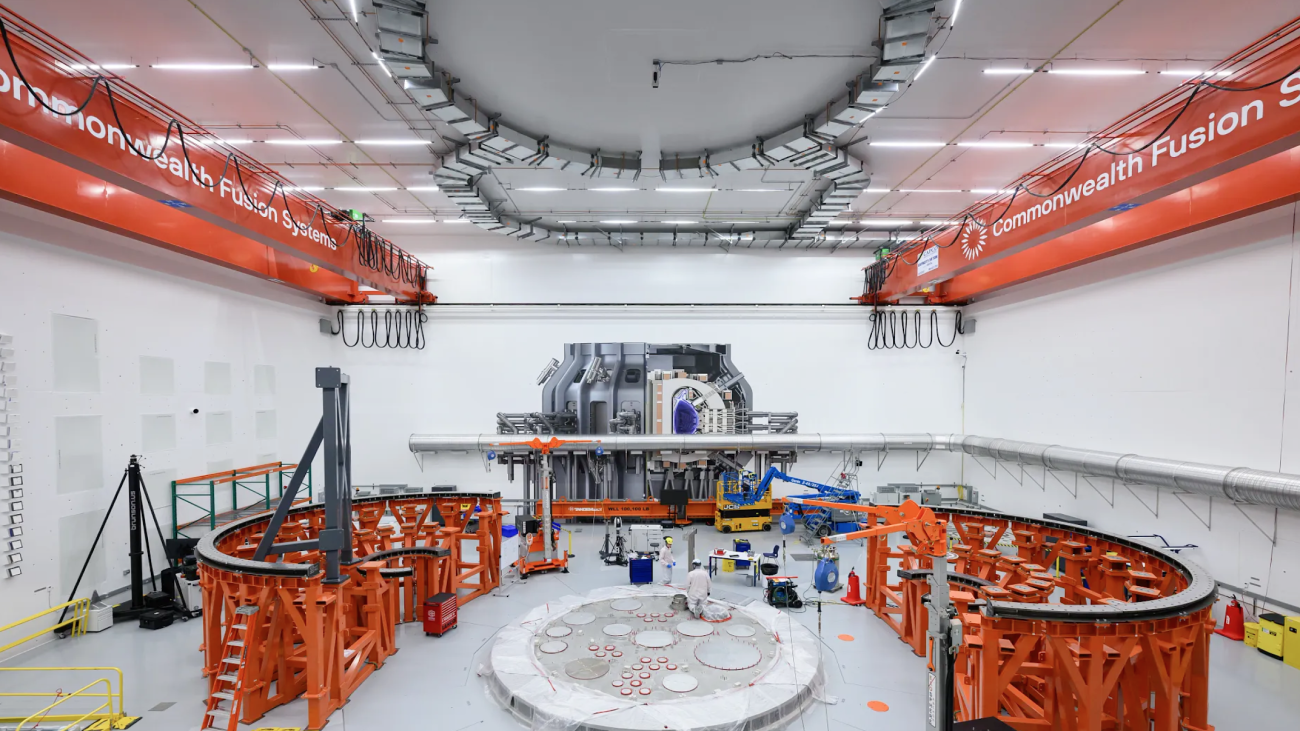
The partnership focuses on optimizing CFS’s compact, powerful tokamak machine called SPARC, which aims to become the first magnetic fusion device in history to generate net energy – a critical milestone known as “breakeven” in the quest for clean, limitless power.
The Fusion Challenge Meets AI Innovation

Fusion energy, the process that powers the sun, requires maintaining plasma at temperatures exceeding 100 million degrees Celsius while keeping it stable within a fusion machine’s physical limits. This represents one of the most complex physics problems ever undertaken.
“Making fusion work on Earth means keeping an ionized gas stable at temperatures over 100 million degrees Celsius,” explained the DeepMind research team. “This is a highly complex physics problem that we’re working to solve with artificial intelligence.”
Three-Pronged AI Approach
The collaboration builds on DeepMind’s previous breakthrough work using deep reinforcement learning to control plasma and has expanded to three key research areas:
- Advanced Plasma Simulation: Developing TORAX, a fast, differentiable plasma simulator written in JAX that can run millions of virtual experiments before SPARC becomes operational
- Energy Optimization: Using reinforcement learning and evolutionary search approaches to identify the most efficient paths to maximizing fusion energy output
- Real-time Control: Creating AI systems that can dynamically control plasma to manage extreme heat loads and optimize performance
TORAX: The Game-Changing Simulator

At the heart of the collaboration is TORAX, DeepMind’s open-source plasma simulator that has become integral to CFS’s daily workflows. The system allows researchers to test and refine operating plans through massive simulation runs, saving what would otherwise require countless hours of experimental setup.
“TORAX is a professional, open-source plasma simulator that saved us countless hours in setting up and running our simulation environments for SPARC,” said Devon Battaglia, Senior Manager of Physics Operations at CFS.
AI-Powered Heat Management
One of the most challenging aspects of fusion energy is managing the immense heat concentrated on small areas within the tokamak. The teams are investigating how reinforcement learning agents can learn to dynamically control plasma to distribute this heat effectively, potentially developing strategies more complex than anything human engineers could design.
Building Toward Commercial Fusion
The partnership represents a significant step toward making fusion energy commercially viable. SPARC leverages powerful high-temperature superconducting magnets and, if successful, could demonstrate net energy gain – producing more power from fusion than required to sustain the reaction.
Google has also made financial investments in CFS, supporting the company’s work toward commercializing fusion technology. The collaboration extends beyond optimizing SPARC operations to building foundations for AI systems that could become central to future fusion power plants.
“This is just the beginning of our journey together,” the DeepMind team stated. “By uniting the revolutionary potential of AI and fusion, we’re building a cleaner and more sustainable energy future.”
This collaboration represents a powerful convergence of artificial intelligence and clean energy technology, potentially accelerating the timeline for fusion energy from decades to years and offering new hope in the fight against climate change.
您好,这是一条评论。若需要审核、编辑或删除评论,请访问仪表盘的评论界面。评论者头像来自 Gravatar。