In a groundbreaking collaboration between Google DeepMind and Yale University, the research community has unveiled C2S-Scale 27B—a revolutionary 27-billion parameter foundation model built on the Gemma family of open models. This sophisticated AI is specifically designed to interpret the language of individual cells, marking a significant leap forward in single-cell analysis and biological discovery.

What makes this announcement particularly remarkable is that C2S-Scale has already generated and validated a novel hypothesis about cancer cellular behavior. The model identified a promising new pathway for cancer therapy that has been experimentally confirmed in living cells, demonstrating AI’s growing capability to contribute meaningfully to scientific discovery.
The model addresses one of the most challenging aspects of cancer immunotherapy: dealing with “cold” tumors that remain invisible to the body’s immune system. The key strategy involves forcing these tumors to display immune-triggering signals through a process called antigen presentation, effectively turning “cold” tumors “hot” and making them vulnerable to immune attack.

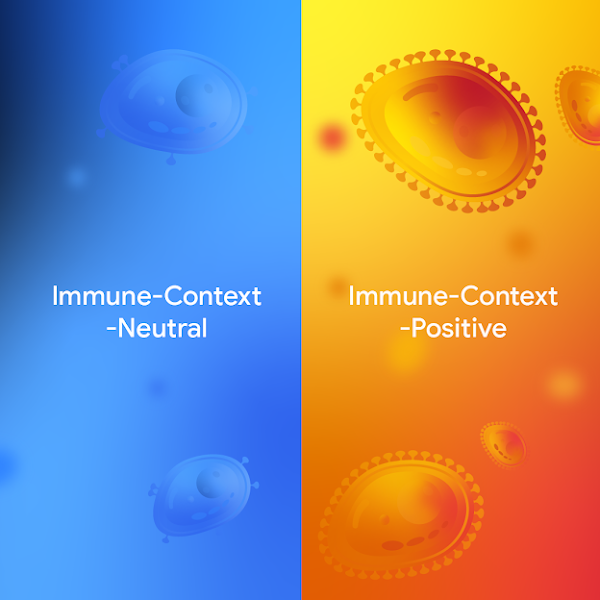
Researchers tasked C2S-Scale with finding a drug that could act as a conditional amplifier—one that would boost immune signals only in specific “immune-context-positive” environments where low levels of interferon were already present but insufficient to trigger antigen presentation on their own. This required sophisticated conditional reasoning that emerged as a capability of the model’s scale, something smaller models couldn’t achieve.
The team implemented a dual-context virtual screen involving over 4,000 drugs across two scenarios: immune-context-positive environments with real patient samples and immune-context-neutral environments with isolated cell line data. The model successfully identified several drug candidates, with 10-30% representing known compounds from prior literature and the remainder being surprising discoveries with no previously established connection to the screening objectives.
The most exciting prediction emerged around silmitasertib (CX-4945), a kinase CK2 inhibitor. The model predicted a strong increase in antigen presentation when this drug was applied in immune-context-positive settings, with minimal effect in neutral environments. This represented a genuinely novel hypothesis, as silmitasertib had never been reported in literature to explicitly enhance MHC-I expression or antigen presentation.
Laboratory validation proved the model’s prediction correct. In human neuroendocrine cell models—completely unseen during training—the combination of silmitasertib and low-dose interferon produced a remarkable synergistic effect, resulting in approximately 50% increased antigen presentation. This makes tumors significantly more visible to the immune system, potentially opening new avenues for combination therapies in cancer treatment.
This success demonstrates that scaling biological models can lead to emergent capabilities beyond simply improving existing tasks. C2S-Scale 27B represents a blueprint for future biological discovery, showing that sufficiently large models can run high-throughput virtual screens, discover context-conditioned biology, and generate testable, biologically-grounded hypotheses.
The research community now has access to C2S-Scale 27B and its associated resources, inviting scientists worldwide to build upon this work and continue translating the language of life into meaningful medical advances.