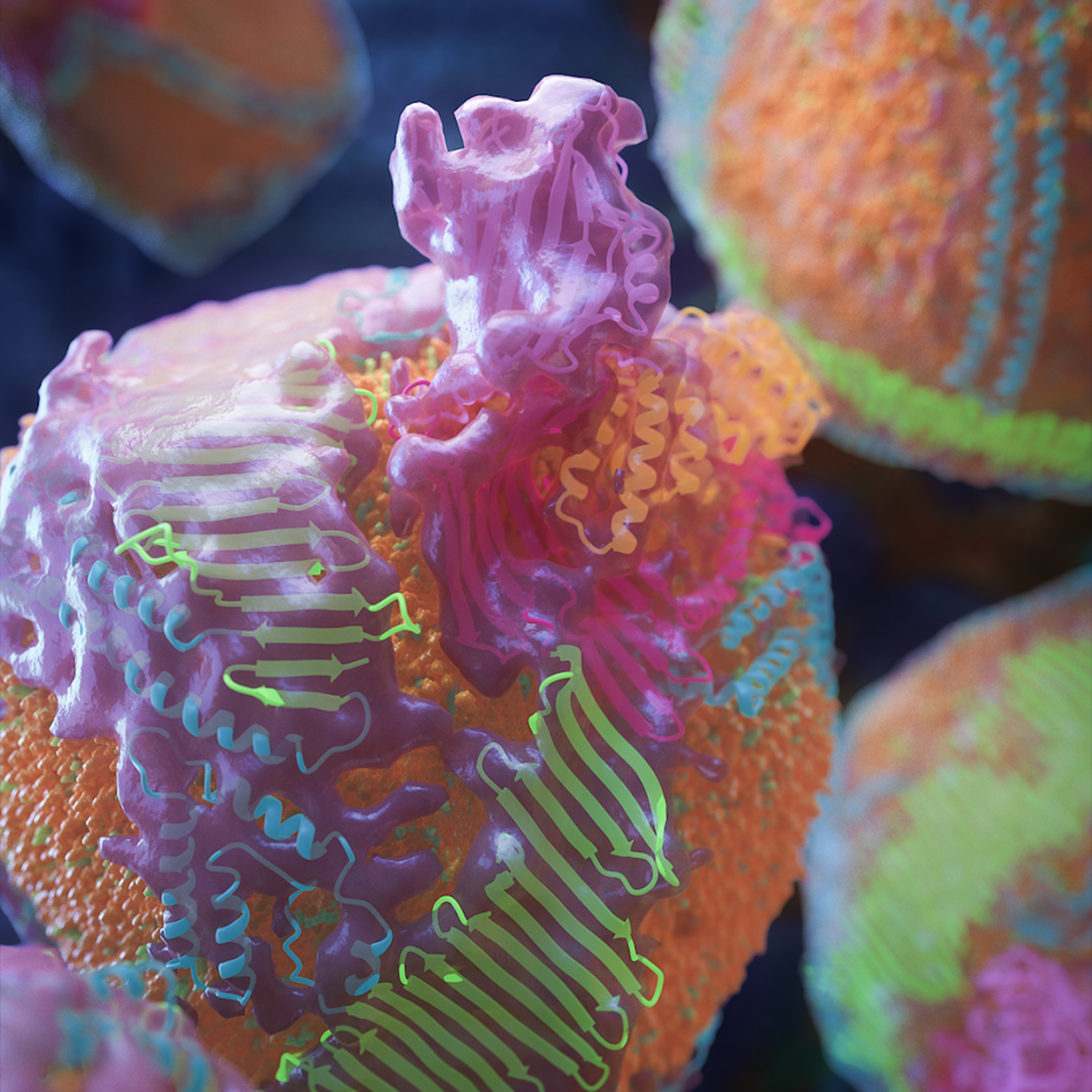
In a groundbreaking scientific achievement, researchers have successfully mapped the structure of apoB100, the key protein responsible for the formation of “bad cholesterol,” using the powerful AI tool AlphaFold. This discovery holds immense potential to revolutionize the treatment of heart disease, the world’s leading cause of death. For decades, scientists have struggled to visualize this enormous protein due to its complex interactions with fats and other molecules. ApoB100 serves as the molecular scaffold for low-density lipoprotein (LDL), which transports fat through the bloodstream and is a major risk factor for atherosclerotic cardiovascular disease (ASCVD).

The research team at the University of Missouri, led by assistant professors Zachary Berndsen and Keith Cassidy, combined cryo-electron microscopy (cryo-EM) with AlphaFold’s predictive capabilities to overcome previous technical limitations. While cryo-EM provided initial images of LDL particles, AlphaFold generated atomic-resolution predictions that were refined using the experimental data. Cassidy emphasized that this hybrid approach was crucial, stating that AlphaFold provided “the raw material to interpret our experimental structure in a way that was frankly impossible before.”
The resulting model reveals apoB100’s intricate structure—a cage-like shell enveloping each LDL particle, complete with a ribbon-like belt that maintains particle integrity in the bloodstream. This detailed understanding opens new avenues for developing precise therapies targeting LDL, potentially transforming how we prevent, diagnose, and treat high cholesterol and ASCVD. The global health implications of this discovery are profound, offering hope for millions affected by cardiovascular conditions.
For Berndsen, this achievement represents the culmination of a personal and professional journey. “It was the first structure I ran through AlphaFold the week it became available,” he shared. “Solving the structure of apoB100 was a dream come true.” While practical applications will require further development, this landmark discovery marks a significant step forward in the fight against heart disease.